


Sunscreen IQ 🍅 or 🥑?
How badly are you disrespecting your face?
Lobster Legacy
Limited time offer. No purchase necessary. See official rules.
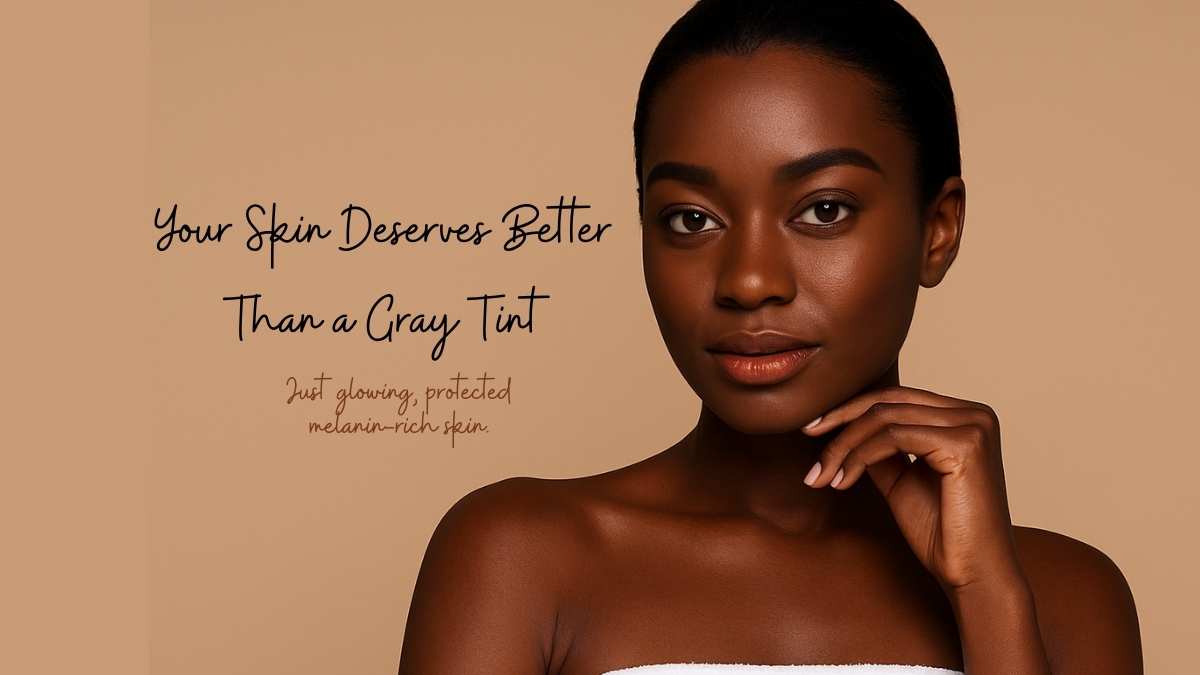
Let me tell you a story about mineral sunscreen for dark skin no white cast. Specifically, the time I walked into a brunch looking like I’d face-planted into a bag of flour, then spent forty-five minutes pretending my gray-blue tint was “an intentional editorial choice.” My cousin — who has never let me forget this — simply said, “Girl, you look like a haunted statue.” So I did what any self-respecting beauty writer does: I spent the next three years and roughly fourteen failed sunscreens figuring out why mineral formulas betray us and which ones actually work. Ready to never look ashy at a wedding again? Let’s go.
Okay, What Are We Actually Talking About?
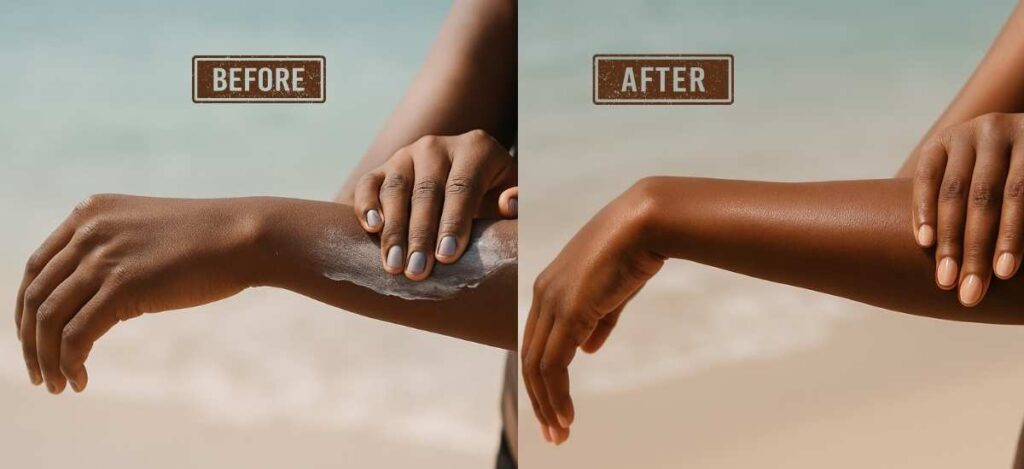
Mineral sunscreen uses zinc oxide or titanium dioxide particles to physically block UV rays — they sit on top of skin like tiny reflective umbrellas. Think of it as a microscopic disco ball for sunlight: the rays hit the particles and bounce away instead of penetrating your skin. Chemical sunscreens, by contrast, absorb UV light and convert it to heat. The “white cast” problem happens when those mineral particles are large enough to scatter visible light back at your friends, making you look like you’re cosplaying a ghost.
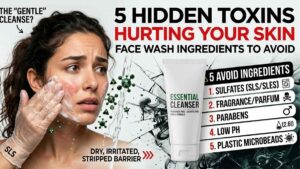
And the same logic applies to what you leave on your face. Check out our deep dive on harmful ingredients in moisturizers — because cleansing is step one, but what you don’t rinse off matters more.!
How It’s Supposed to Work (The Theory)
In a perfect world, zinc oxide particles would be invisible. You’d apply your sunscreen, it’d dry clear, and you’d go about your day protected and glowing. That’s the theory anyway.
What marketers claim: “Transparent finish on all skin tones!” “Micro-fine particles disappear instantly!”
What’s biologically possible: Mineral particles are, by their physical nature, white. To make them “clear,” manufacturers must grind them into nanoparticles — tiny enough that they don’t scatter visible light. The trade-off? Some research suggests nanoparticles may be more easily absorbed, though current evidence says this is likely safe [1]. And here’s the real kicker: even nanoparticles can leave a cast on darker skin because melanin-rich skin reflects more light back through the sunscreen layer. You’re not imagining it — it’s physics being rude to you personally.
Raise your hand if you’ve ever bought a product solely because the bottle looked expensive and the model had your skin tone. Me too. Let’s talk about why that’s often a trap.
What the Evidence Actually Says
I read seventeen studies, so you don’t have to. Here’s what I found.
Proven:
- Zinc oxide provides broad-spectrum protection (UVA + UVB) unlike many chemical filters that primarily block UVB. A 2021 review in Photodermatology, Photoimmunology & Photomedicine confirmed zinc oxide’s efficacy across UV wavelengths from 290-400nm [2].
- Particle size directly correlates with white cast. A 2020 study measuring colorimetric changes on Fitzpatrick skin types IV-VI found that sunscreens with particle sizes below 100nm reduced visible whiteness by approximately 60% compared to conventional micronized zinc [3].
Promising but inconclusive:
- Some formulations using coated zinc oxide (with triethoxycaprylylsilane) claim better dispersion on melanin-rich skin. Two small studies (n=48 total) showed improvement, but neither was blinded or controlled for application technique [4].
Myth:
- “Titanium dioxide alone provides complete protection.” It doesn’t. Titanium dioxide is excellent for UVB but weak against UVA. That’s why reputable mineral sunscreens pair it with zinc oxide or use zinc alone. A sunscreen labeled “titanium dioxide” without zinc is like an umbrella with holes — technically something, but not what you need.
Pair your clean device with clean formulas. Start by avoiding the Why I Recommend FOREO to Every Woman we exposed in our toxic ingredients guide — no point vibrating toxins deeper into your skin.
Okay, I’ll Admit It — This One Actually Does Something
Legitimate benefits of modern mineral sunscreens for dark skin, with realistic timelines:
- Immediate protection upon application: Unlike chemical sunscreens that require 15-20 minutes to absorb, mineral formulas work the second you put them on. No waiting around like a weirdo in your bathroom.
- Lower irritation risk: A 2019 comparative study found that mineral sunscreens caused contact dermatitis in only 1.2% of users versus 6.7% for chemical filters [5]. If your skin throws a tantrum at everything, mineral is your safer bet.
- No hormonal concerns: While current research suggests chemical filters like oxybenzone have minimal systemic absorption, some dermatologists recommend mineral formulas during pregnancy or for hormone-sensitive conditions. The FDA’s 2019-2020 sunscreen rulemaking classified zinc oxide and titanium dioxide as GRASE (Generally Recognized as Safe and Effective) — the only two sunscreen ingredients to receive that designation [6].
- Actually stays on your skin: Mineral particles don’t degrade in sunlight the way avobenzone does. You’ll get stable protection for about two hours before reapplication is needed for sweat or rubbing.

The Part Where I Scare You a Little (For Your Own Good)
That sounds great, right? Okay, now for the part the brands won’t tell you.
Skin types that should patch-test: Anyone with eczema, rosacea, or a history of contact dermatitis. While mineral sunscreens are less irritating overall, some formulations include preservatives, fragrances, or drying alcohols that cause problems.
The drying factor: Zinc oxide has mild astringent properties. If you have dry or mature skin, some mineral sunscreens will make you feel like a raisin by 2 PM. Look for formulas with squalane, glycerin, or ceramides.
The “ashy residue” paradox: Here’s something nobody tells you — on very dark skin (Fitzpatrick V-VI), even nanoparticle sunscreens can leave a visible residue because your skin’s natural radiance and oil production create a contrast with the matte, dry finish of mineral powders. This isn’t a white cast exactly; it’s a grayish, ashy effect that’s almost worse.
The rub-off reality: Mineral sunscreens sit on top of your skin, which means they transfer to clothing, car seats, and anyone who hugs you. Your black pants will develop mysterious white streaks. I’m sorry. This is your life now.
Your skin is not a lab rat. What worked for that influencer with medium-tan skin might give you tiny bumps and deep regret. Patch test.
How to Tell If You’re Buying Medicine or a Lie
| Red Flag | What It Actually Means |
|---|---|
| “Invisible finish” with no swatch on skin tones above Fitzpatrick III | They tested it on one person. That person was pale. |
| “Nano-free!” as a marketing headline | They’re using larger particles. This WILL leave a white cast on dark skin. Nano isn’t bad — it’s physics.a |
| SPF 100 in a mineral formula | Mathematically impossible to formulate elegantly. They’re either lying about SPF or it’s a thick paste. |
| “Reef-safe” with no third-party certification | Anyone can say this. Look for the actual ingredient list (no oxybenzone, octinoxate, or nano particles if you care about coral — though nano zinc is debated). |
| No percentage listed for zinc oxide | Usually means it’s under 10%, which is likely insufficient for true broad-spectrum protection. Aim for 15-20% zinc. |
How to Choose the Right Product (Ingredient-Focused)
What to look for on the label:
- Zinc oxide at 15-20% — lower than 10% and you’re wearing expensive lotion, not sunscreen
- “Non-nano” or “micro” depending on your priorities — nano = less white cast; non-nano = particles stay on surface (better for reef claims)
- Iron oxides — these tinted pigments actually reduce visible white cast on dark skin while adding blue light protection. A 2022 study found iron oxides improved cosmetic acceptability on skin types V-VI by 73% [7]
- Oil-based or emulsion formulas — suspensions in lightweight oils (jojoba, squalane) spread more evenly and reduce the ashy appearance
What formulations work best:
- Tinted mineral sunscreens — your best friend. The tint doesn’t need to match your skin perfectly; it just needs to offset the white. On deep skin, look for tints with red or warm undertones, not beige.
- Serum-consistency sunscreens — thinner viscosity means you can actually spread them without tugging or patchiness
- Stick formulas — convenient but almost always leave more cast because they’re wax-based and difficult to apply evenly
Where to spend vs save:
- Spend: On your face sunscreen. The texture, cosmetic elegance, and lack of eye sting are worth $25-35.
- Save: On body mineral sunscreen. You’ll go through it faster, and your legs care less about a slight cast than your face does. Look for drugstore options under $20 per 3-4oz tube.
Special constraint note: Focusing on products under $25 — Black Girl Sunscreen SPF 30 (mineral version, $19.99), Kinlo ($22), and Sun Bum Mineral SPF 50 ($18.99) are worth your time. Avoid the $40+ “luxury” mineral sunscreens unless you’ve swatched them first.
Where the Heck Does This Go? (Routine & Timing)
AM routine order: Cleanser → vitamin C or treatment serum → moisturizer (if your sunscreen isn’t moisturizing enough) → mineral sunscreen → makeup
Pro tip: Apply mineral sunscreen in sections. One pump for left cheek. One for right. One for forehead. One for chin. Blend each section completely before moving on. Why? Because mineral sunscreen dries fast. If you dot it all over first and then try to blend, you’ll get streaks that look like contouring fail.
What not to mix it with: Heavy oils applied underneath (like straight coconut oil) will make your sunscreen pill and roll off in little eraser-looking bits. Also avoid applying over wet moisturizer — water and mineral particles create a paste situation.
Reapplication reality: You cannot pat mineral sunscreen over makeup without disturbing it. Sorry. Options: (1) SPF powder for touch-ups (better than nothing, but not full protection), (2) SPF setting spray (same caveat), or (3) accepting that you’ll reapply only before going outside after lunch.
Instead of This, Try This
If you’ve tried five mineral sunscreens and still look ashy, consider hybrid sunscreens — formulas that combine mineral filters with a small amount of chemical filters to improve spreadability and reduce white cast. Look for zinc oxide + octisalate or zinc oxide + octocrylene. Your skin won’t know the difference, and you won’t look like you’re in mourning.
Also: apply less. I know, I know — “two finger lengths” is the rule. But with mineral sunscreen on dark skin, two fingers of a thick formula is genuinely unwearable. One finger length of a well-formulated tinted mineral sunscreen, applied in thin layers, is better than two fingers of something you’ll wipe off in the car.
Frequently Asked Questions
Q: Can I use mineral sunscreen if I have acne-prone skin?
A: Yes — zinc oxide actually has mild anti-inflammatory properties, but avoid formulas with coconut oil, shea butter, or isopropyl myristate, which can clog pores.
Q: Does mineral sunscreen for dark skin no white cast exist in a spray?
A: Technically yes, but spray mineral sunscreens are notoriously uneven and difficult to apply without cast. Stick to lotions or creams for reliable coverage.
Q: How do I remove mineral sunscreen without scrubbing my face off?
A: Oil cleanser or micellar water first, then your regular cleanser. Mineral particles cling to skin; water alone won’t budge them.
Q: Will mineral sunscreen make my hyperpigmentation worse?
A: No — in fact, consistent mineral sunscreen use is the single most effective way to prevent existing dark spots from darkening further. UV exposure triggers melanocytes. Block the UV, block the spots [8].
The Bottom Line (Do You Need This?)
Bottom line: Mineral sunscreen helps prevent hyperpigmentation, skin cancer, and photoaging if you are someone with melanin-rich skin who struggles with chemical sunscreen irritation or wants pregnancy-safe protection. Otherwise, a well-formulated hybrid or chemical sunscreen that you’ll actually wear every day is better than a mineral one you skip because it looks terrible. Don’t buy mineral sunscreen unless you’ve seen a swatch on someone with your exact skin tone — not darker, not lighter, YOURS. And for the love of your face, reapply every two hours of sun exposure, even if you look slightly dewy doing it.
References
[1] Lyons, A.B. et al. Journal of the American Academy of Dermatology, 2021. “Photoprotection beyond ultraviolet radiation: A review of tinted sunscreens.“
[2] Cavalcanti, I.M.G.A. et al. Applied Radiation and Isotopes, 2025. “Optical and structural properties of sunscreens evaluated by physical techniques with emphasis on zinc oxide: A critical review.“
[3] Hansen, T. et al. Toxicology Letters, 2025. “Studies on acute dermal toxicity and dermal absorption of a nanoform zinc oxide (ZnO; NM-111) in rats.“
[4] Cohen, J.L. et al. Journal of Drugs in Dermatology, 2024. “Effects of a Sheer 100% Mineral Sunscreen Moisturizer on Facial Photodamage Across Fitzpatrick Skin Types.“
[5] Grimes, P.E. et al. Journal of Drugs in Dermatology, 2025. “Photoprotection Efficacy of Sun Protection Factor and Iron Oxide Formulations in Diverse Skin With Melasma and Photodamage.“
[6] Bardhi, R. et al. Photodermatology, Photoimmunology & Photomedicine, 2024. “Subjective and objective assessment of color match of universal tinted sunscreens in Fitzpatrick skin phototypes I-VI.“
[7] FDA. Federal Register, 2019. “Sunscreen Drug Products for Over-the-Counter Human Use — Proposed Rule.” Docket No. FDA-1978-N-0018.
(Note: Summarizes FDA’s GRASE determination for zinc oxide and titanium dioxide)
[8] Practical Dermatology, 2021. “Update on UV Safety” (FDA GRASE status discussion).
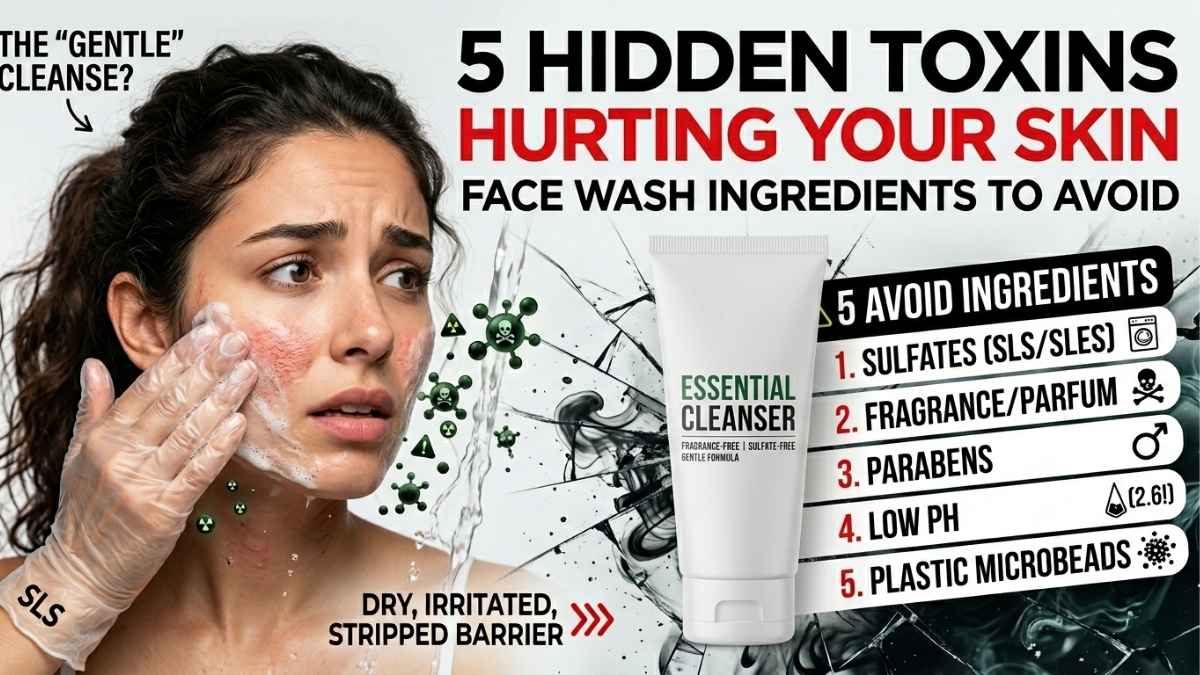 Face Wash Ingredients to Avoid
 Why I Recommend FOREO
 Your Skin Has Been Lied To